Princess Diana & her Influence on Fashion
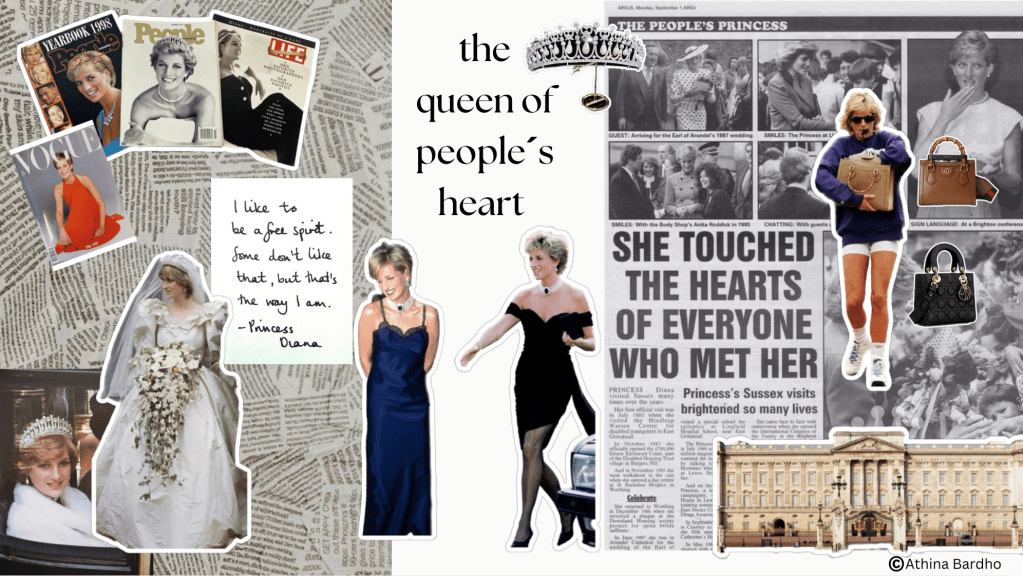
by Athina Bardho
In the ever-evolving world of fashion, where micro-trends come and go at lightning speed, some styles transcend the fleeting nature of fast fashion and are immortalized as „timeless.“ Princess Diana, affectionately known as the „People’s Princess,“ serves as a paragon of such enduring influence. Even decades after her tragic passing, Diana’s legacy continues to captivate the fashion world, leaving an indelible mark on designers, celebrities, and consumers alike. From the iconic Lady Dior bag—renamed in her honor—to the Chanel Diana bag, her style remains synonymous with elegance, versatility, and approachability.
But what exactly makes certain styles withstand the relentless churn of trends? Who truly influences the direction of fashion—designers crafting runway masterpieces, street style movements bubbling up from urban metropolises, or the elite upper class that shapes luxury markets? Princess Diana offers a fascinating case study in how a single individual can encapsulate all these forces. She was an aristocrat whose fashion choices spoke to the masses, a style icon who blurred the lines between high fashion and everyday wear, and an influencer decades before Instagram or TikTok even existed.
Today, modern fashion icons like Hailey Bieber continue to channel Diana’s aesthetic, proving that her legacy isn’t just about nostalgia—it’s a living, breathing force that still shapes consumer behavior and designer collections. As marketers, understanding how figures like Princess Diana influence fashion consumption is critical, not only for tracking trends but for predicting how future icons might reshape the industry.
The Historical Context of Diana’s Relevance
Princess Diana was beloved for reasons that extended far beyond her royal status. Her humanitarian efforts and genuine compassion for those in need made her a unique figure within the British monarchy. Diana used her platform to advocate for causes like AIDS awareness, landmine victims, and children’s welfare, earning her widespread admiration and making her relatable to people from all walks of life. Her willingness to show vulnerability, whether discussing her personal struggles or her mental health, made her stand out in a monarchy often perceived as distant and impersonal.
Diana’s authenticity resonated deeply with the public, who saw her as the „People’s Princess.“ Her role as a devoted mother to Princes William and Harry further solidified her image as a caring, relatable figure. She also modernized the British monarchy, bringing it closer to the people and adding an element of accessibility to an institution that had long been viewed as rigid and out of touch.
Historically, Diana is part of a long line of women in British royalty who have been portrayed as „wronged women,“ much like Anne Boleyn. This historical narrative has added to the public’s fascination with Diana, even years after her passing. New generations continue to be captivated by her legacy, as seen in the enduring media interest in her sons, Princes William and Harry, and their families. Diana’s relevance remains strong today, and she is still seen as a symbol of resilience, authenticity, and compassion in an ever-changing world.
Diana’s tragic life and death also brought attention to larger issues, such as the media’s treatment of women in the public eye and the intersection of fame, mental health, and misogyny. Her ongoing relevance, even decades after her death, reflects her lasting impact on culture, fashion, and societal views on women and royalty (Laskowski, 2022).
The Evolution of Princess Diana’s Style
Princess Diana’s style journey began in the 1980s, when she was first introduced to the public as the future Queen of England. At this early stage, her wardrobe was influenced by the royal dress code, which favored conservative, traditional looks. However, as Diana grew more comfortable in her role and began asserting her independence, her fashion sense evolved dramatically.
As Vogue describes, Diana gradually transitioned from wearing prim, conservative dresses and hats to donning more daring, fashion-forward outfits. Vibrant colors, glamorous ball gowns, and sharply tailored suits became signatures of her evolving style. Over time, she perfected the balance between upholding royal decorum and expressing her individuality. This evolution in her wardrobe mirrored her personal growth as she moved away from the traditional expectations of her royal position and embraced her identity as a modern, independent woman.
Making High Fashion Accessible to the Public
One of Diana’s most significant contributions to fashion was her ability to make high fashion feel accessible. While she frequently wore couture gowns and luxury labels such as Catherine Walker, Versace, and Chanel, she was equally known for mixing high-end pieces with casual, everyday wear. This blend of luxury and approachability endeared her to millions of fans who saw her as not just a royal figure but someone they could relate to.
Diana’s off-duty outfits are particularly emblematic of her accessible style. Long before athleisure became a mainstream trend, Diana was photographed in casual yet stylish outfits, such as cycling shorts paired with oversized sweatshirts and sneakers. These laid-back, effortless looks resonated with the public, helping to redefine what casual yet stylish clothing could be. Even today, her off-duty style remains celebrated, with fashion brands like Nike and Adidas drawing inspiration from her sporty, comfortable ensembles.
Athleisure: Diana’s Lasting Impact on Modern Fashion
Diana’s influence on the rise of athleisure cannot be overstated. She helped move the trend from niche to mainstream, making it a staple in wardrobes around the globe. Her ability to elevate casual fashion to the realm of high style contributed to a larger cultural shift, where comfort and chicness no longer had to be mutually exclusive.
Athleisure—fashion that combines athletic wear with casual, everyday clothing—has become one of the dominant trends of the last decade. While it may seem like a recent phenomenon, Princess Diana was one of its earliest and most influential champions. Her off-duty looks, like pairing cycling shorts with oversized sweatshirts, were groundbreaking for their time. By making it clear that fashion didn’t need to be formal to be stylish, Diana helped set the stage for the global athleisure trend.
Today, brands such as Lululemon, Nike, and Adidas have built entire business models around the athleisure concept, blurring the lines between casual wear and workout gear. Diana’s ability to blend comfort with style paved the way for today’s athleisure boom, which is now embraced by consumers across different demographics. Diana redefined how women approached casual dressing, taking what was once considered informal attire and elevating it to high fashion.
Streetwear and Power Dressing: How Diana Shaped Everyday Fashion
In addition to athleisure, Diana had a profound influence on the rise of streetwear. Her casual, relaxed outfits—featuring denim, sneakers, and oversized blazers—were considered unconventional for a member of the royal family. Yet, her effortless style made these looks popular among the general public and inspired a wave of streetwear trends that are still relevant today.
Diana’s fashion influence extended beyond casual wear, however. She also played a pivotal role in the rise of power dressing during the 1980s and 1990s. Tailored suits, bold accessories, and structured silhouettes became hallmarks of her style, embodying the confidence and authority associated with power dressing. Diana’s suits, often created by designers like Catherine Walker, were not only stylish but also symbolized her growing independence and strength as a public figure. Her fashion choices became an expression of personal empowerment, inspiring women around the world to embrace power dressing as a way to project confidence and assertiveness.
The “Revenge Dress” and Fashion as Empowerment
One of the most iconic moments in Princess Diana’s fashion history was the debut of her famous “revenge dress.” This sleek, off-the-shoulder black dress, designed by Christina Stambolian, became a symbol of empowerment and resilience. Worn on the night that Prince Charles publicly admitted to his infidelity, the dress made a bold statement about Diana’s newfound independence and confidence. Despite the personal challenges she faced, Diana used fashion as a way to demonstrate that she was moving forward with grace and strength.
The “revenge dress” remains a powerful symbol in popular culture and has inspired countless fashion moments on red carpets and in fashion editorials. It is a testament to how Diana used clothing as a form of self-expression and empowerment. By stepping out in such a bold and glamorous dress during a difficult time in her life, she demonstrated the transformative power of fashion in conveying inner strength and resilience.
Royal Influence on Fashion: Diana’s Unique Role
Princess Diana’s royal status played a crucial role in her influence over the fashion world. As a member of the British royal family, she was constantly in the public eye, and her fashion choices were scrutinized on a global scale. Every outfit she wore had the potential to set off immediate trends and shape consumer behavior. Her royal title gave her a level of visibility and credibility that few fashion icons could match, making her an aspirational figure for millions of people.
However, Diana did more than simply follow royal fashion traditions—she actively shaped trends and became a muse for some of the world’s most renowned designers. Brands like Versace, Chanel, and Gucci all found inspiration in Diana’s iconic looks, incorporating elements of her style into their collections. Even today, fashion houses continue to pay tribute to Diana’s timeless fashion sense, ensuring that her legacy remains alive in the fashion industry.
The Trickle-Down Effect: How Diana Shaped Consumer Trends
Princess Diana’s influence on fashion can be understood through the Trickle-Down Theory, which explains how trends that start among the elite eventually filter down to the mainstream. Diana’s high-fashion looks—such as her couture gowns by Catherine Walker—set the stage for trends that later became popular among everyday consumers. Her glamorous evening gowns, worn to high-profile events, created a demand for elegant formalwear among women attending weddings, galas, and other special occasions.
Diana’s Lasting Legacy in Fashion
Even decades after her tragic passing, Princess Diana’s influence on fashion remains undeniable, solidifying her place as one of the most iconic style figures in modern history. Her fashion legacy continues to captivate the world, with designers, celebrities, and fashion lovers frequently drawing inspiration from her wardrobe choices. Whether it’s her timeless off-duty looks, power suits, or her more glamorous evening gowns, Diana’s style resonates across generations.
Modern fashion brands like Off-White, Chanel, Louis Vuitton, and Rowing Blazers continue to evoke Diana’s classic style in their collections. Additionally, social media platforms like Instagram and TikTok have become virtual runways where influencers, fashion bloggers, and celebrities regularly recreate her most iconic looks. For instance, Hailey Bieber is often cited as a contemporary figure who channels Diana’s casual yet chic street style, drawing significant media attention to Diana’s enduring influence.
The continued fascination with Princess Diana’s fashion sense speaks volumes about her ability to transcend not only time but also cultural and generational shifts. From royalty to runway, and from celebrity to influencer culture, her style has become more than just historical reference—it’s a blueprint for modern-day fashion, demonstrating how timeless elegance and relatability can coexist.
Conclusion: Diana’s Contribution to Fashion Beyond Royalty
Princess Diana’s impact on fashion extended far beyond her royal title, transforming her into a global style icon whose influence can still be seen today. Her unique ability to blend high fashion with casual, accessible looks made her relatable to the public while still setting trends in both luxury and everyday fashion. Her support of emerging designers, iconic moments like the “revenge dress,” and pioneering of athleisure trends laid the groundwork for modern fashion movements, ensuring that her legacy would endure well beyond her lifetime.
By making high fashion feel approachable and embracing her own individuality, Diana redefined the role of royalty in the fashion world. Her influence on athleisure, streetwear, and power dressing paved the way for future icons and reshaped how women dress for both formal and casual settings. As the fashion world continues to evolve, it’s clear that Princess Diana’s lasting influence will continue to inspire designers and consumers alike for generations to come.
From her timeless elegance to her fearless individuality, Princess Diana’s impact on fashion remains a powerful example of how one person can shape the course of an entire industry. Her legacy continues to inspire both high-end designers and everyday consumers, ensuring that her iconic style remains relevant, cherished, and ever-present in the world of fashion.
Sources:
- BuzzFeed. (2022). How to Dress Like Princess Diana: Iconic Outfits to Inspire You. BuzzFeed.
- CNN. (2022). Princess Diana’s Fashion Legacy Endures 25 Years After Her Death. CNN.
- Julien’s Auctions. (2020). Princess Diana: Timeless Style Icon. Julien’s Auctions.
- Laskowski, A. (2022, August 31). Why Are We Still Talking about Princess Diana 25 Years after Her Death? Boston University. https://www.bu.edu/articles/2022/why-are-we-still-talking-about-princess-diana-25-years-after-her-death/.
- Vogue. (2020). Diana, Princess of Wales: Her Style Evolution. Vogue.
- Vogue. (2020). Princess Diana Popularized Athleisure Long Before It Became Fall’s It Look. Vogue.
- WOOF Mag. (2022). Princess Diana’s Impact on Modern Fashion. WOOF Mag.
 Athina Bardho
Hinterlasse einen Kommentar