by Athina Bardho

Financial Times, “Sustainable fashion? There’s no such thing”, 2020, via http://www.ft.com
In a world increasingly focused on sustainability, the luxury fashion industry faces both challenges and opportunities. As one of the largest luxury conglomerates, LVMH Moët Hennessy Louis Vuitton (LVMH) has a significant role to play in setting standards for environmental and social responsibility. With a diverse portfolio that includes renowned brands such as Louis Vuitton, Dior, and Givenchy, LVMH is at the forefront of the luxury market. However, the question remains: how can LVMH align its prestigious image with sustainable practices while maintaining profitability? This blog post delves into LVMH’s current sustainability initiatives, the challenges it faces, and actionable recommendations to bolster its commitment to a sustainable future.
Chasing Green Dreams: LVMH’s Commitment to SustainabilitY
LVMH has long recognized the need to address environmental and social issues, particularly as consumers become increasingly aware of the impact of their purchasing decisions. The company’s sustainability initiative, LIFE 360, launched in 2021, aims to drive sustainable development across its entire value chain, from sourcing raw materials to the end of product life. This initiative emphasizes the importance of not just reducing the environmental footprint but also enhancing social responsibility.
LVMH’s sustainability strategy encompasses several key areas:
- Sustainable Sourcing: The company is dedicated to sourcing materials responsibly, focusing on sustainable practices for leather, cotton, and other textiles. For example, LVMH has pledged to source 100% of its cotton from sustainable sources by 2025.
- Innovation in Materials: LVMH is investing in innovative materials that minimize environmental impact. This includes partnerships with companies like MycoWorks, which develops sustainable leather alternatives made from mycelium, the root structure of mushrooms. This innovative approach allows LVMH to explore sustainable alternatives while maintaining the luxurious feel associated with its products.
- Waste Reduction: Implementing circular economy practices is crucial for LVMH’s sustainability goals. The company aims to reduce waste across its operations and promote recycling initiatives. Collaborations with companies like Vestiaire Collective have bolstered LVMH’s efforts in the resale market, encouraging consumers to recycle their luxury items and extend product life cycles.
- Environmental Footprint: LVMH is committed to reducing its greenhouse gas emissions. The company has set ambitious targets to decrease emissions by 25% per unit of revenue by 2025. This includes improving energy efficiency across its supply chain and investing in renewable energy sources.
The Luxury Industry’s Environmental Impact
The luxury fashion industry is notorious for its environmental impact, contributing significantly to pollution, waste, and carbon emissions. According to a report by McKinsey & Company, the fashion industry is responsible for about 2-8% of global greenhouse gas emissions. The production of textiles and apparel is a major contributor to water pollution, deforestation, and biodiversity loss. The Global Fashion Agenda estimates that if the fashion industry continues on its current trajectory, it could account for a staggering 26% of the world’s carbon budget by 2030.

The Global Fashion Group, “Our Climate Is Changing – Sustainability Report”, 2021, via http://www.global-fashion-group.com
Given this context, it is imperative for brands like LVMH to prioritize sustainability not only to meet regulatory requirements but also to respond to changing consumer expectations. Eco-conscious consumers are increasingly demanding transparency and ethical practices from the brands they support. A report from ThredUp highlights that 62% of consumers want brands to take a stand on environmental issues, and 57% are willing to pay more for sustainable products.
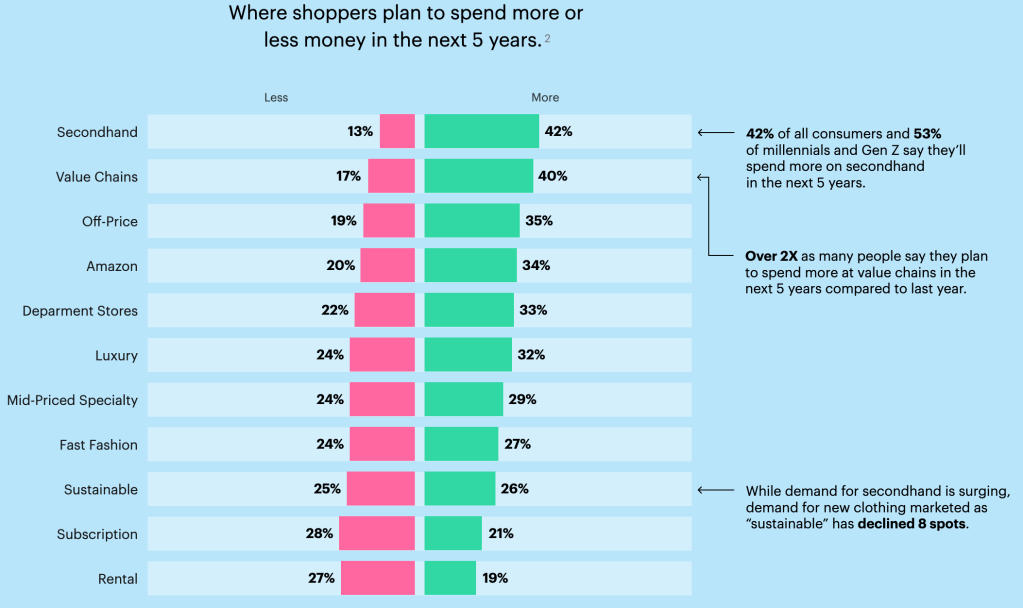
Thred Up, “2021 Resale Report”, 2021, via thredup.com
Challenges in the Path to Sustainability
Despite its robust sustainability strategy, LVMH faces several challenges in its quest for a more sustainable future:
- Balancing Luxury and Sustainability: Luxury brands often emphasize exclusivity and high-quality craftsmanship, which can conflict with sustainable practices. Achieving a balance between maintaining brand prestige and adopting eco-friendly methods is a complex challenge.
- Supply Chain Complexity: LVMH’s extensive supply chain involves numerous stakeholders, making it difficult to ensure that every aspect of production aligns with sustainability goals. Monitoring and enforcing sustainable practices across all suppliers require significant resources and transparency.
- Consumer Perceptions: While many consumers express a desire for sustainable products, their purchasing behavior does not always align with their values. Luxury consumers may prioritize brand heritage and status over sustainability, leading to skepticism about the authenticity of brands’ green claims.
- Regulatory Pressures: As governments implement stricter environmental regulations, LVMH must navigate these changing requirements while maintaining its business operations. Compliance with diverse regulations across different regions can be a complex task.
Strategic Recommendations for LVMH
To strengthen its sustainability efforts, LVMH should consider the following recommendations:
1. Enhancing Transparency and Accountability
Transparency is crucial in building consumer trust and demonstrating a genuine commitment to sustainability. LVMH can enhance transparency by providing detailed reports on its sustainability progress, including data on sourcing practices, emissions reductions, and waste management. Implementing third-party audits can also ensure accountability and credibility.
2. Investing in Sustainable Innovations
Continued investment in sustainable innovations is essential for LVMH to remain competitive in the luxury market. The company should explore partnerships with startups and innovators in the sustainability space to develop new materials and production methods. This can include investing in biotechnology for sustainable textiles or collaborating with local artisans to create unique, eco-friendly products.
3. Consumer Engagement and Education
Engaging consumers in sustainability initiatives can foster loyalty and encourage responsible purchasing behavior. LVMH should launch educational campaigns that inform consumers about the importance of sustainable fashion and the steps the company is taking to promote it. Offering incentives for recycling or reselling products can also encourage sustainable consumer practices.
4. Circular Economy Initiatives
Expanding circular economy initiatives will position LVMH as a leader in sustainable luxury. The company can create programs that allow consumers to return used products for recycling or refurbishing. This not only reduces waste but also reinforces the brand’s commitment to sustainability.
5. Collaboration with Industry Peers
Collaborating with other luxury brands to establish industry-wide sustainability standards can amplify LVMH’s impact. By working together, luxury brands can share best practices, resources, and knowledge, ultimately driving systemic change in the industry.
The Role of Technology in Sustainable Luxury
Technology plays a pivotal role in enhancing LVMH’s sustainability efforts. By leveraging data analytics, the company can gain insights into consumer behavior, supply chain efficiency, and environmental impact. Here are some technological advancements that can further LVMH’s sustainability journey:
1. Blockchain for Transparency
Implementing blockchain technology can enhance transparency throughout LVMH’s supply chain. By using blockchain, the company can provide consumers with verifiable information about the sourcing and production of its products. This can help build trust and confidence among consumers seeking ethically produced luxury items.
2. Artificial Intelligence for Supply Chain Optimization
AI can be utilized to optimize LVMH’s supply chain by predicting demand, minimizing waste, and improving resource allocation. By analyzing data trends, LVMH can streamline its operations and reduce its environmental footprint.
3. Virtual and Augmented Reality
Virtual and augmented reality technologies can enhance the consumer experience while promoting sustainability. LVMH can use these technologies to create immersive experiences that educate consumers about the sustainability initiatives of its brands, helping them connect emotionally with the brand’s values.
Consumer-Centric Innovations
The future of sustainability in luxury fashion will increasingly focus on consumer-centric innovations. LVMH must continue to engage with consumers to understand their preferences and values. By creating products and experiences that resonate with eco-conscious consumers, LVMH can drive demand for sustainable luxury. This could include personalized shopping experiences, limited edition collections that utilize sustainable materials, or partnerships with artists and designers focused on sustainability.
Limited Edition Collections
LVMH can launch limited edition collections made entirely from sustainable materials, promoting exclusivity while emphasizing its commitment to sustainability. Collaborating with artists who share a passion for eco-friendly practices can enhance the appeal of these collections.
Personalized Shopping Experiences
Incorporating personalized shopping experiences can allow LVMH to cater to the unique preferences of eco-conscious consumers. This could involve offering customized products made from sustainable materials, providing consumers with a sense of ownership in the sustainability journey.
Regulatory Compliance and Advocacy
As governments worldwide implement stricter regulations related to sustainability, LVMH must ensure compliance with these standards. Additionally, LVMH can advocate for policies that support sustainable practices within the fashion industry. By engaging with policymakers and industry associations, LVMH can contribute to the development of regulations that promote environmental responsibility and social equity.
LVMH should actively engage with policymakers to advocate for regulations that benefit the environment and the luxury industry. By collaborating with other industry leaders, LVMH can drive systemic change that promotes sustainability at a larger scale.
Joining industry initiatives focused on sustainability can enhance LVMH’s reputation and influence. By participating in coalitions and organizations dedicated to sustainable fashion, LVMH can contribute to the development of best practices and share its insights with peers.
LVMH’s journey toward sustainability represents a significant shift in the luxury fashion industry. By embracing sustainable practices, innovative materials, and a commitment to ethical labor, LVMH is setting an example for other brands to follow. However, the challenges are significant, and the journey is ongoing. By prioritizing sustainability, engaging consumers, and collaborating with industry stakeholders, LVMH can continue to lead the way in redef ing the luxury fashion narrative.
The Importance of Consumer Behavior in Luxury Fashion
Understanding consumer behavior is paramount for LVMH as it navigates the complexities of sustainable luxury. While there is a clear trend toward eco-consciousness, translating this awareness into consistent purchasing decisions remains a challenge.
The Influence of Social Media
Social media platforms have transformed how consumers engage with brands and their values. Influencers and activists are now pivotal in shaping consumer perceptions of sustainability. LVMH can leverage social media to communicate its sustainability initiatives effectively, showcasing authentic stories that resonate with its audience.
For instance, brands like Stella McCartney, which is known for its commitment to sustainable fashion, often utilize social media to highlight its eco-friendly practices. LVMH can create campaigns that not only promote products but also educate consumers about the environmental impact of their choices.
Luxury Reimagined
The concept of luxury is evolving. Consumers, particularly younger generations, are redefining luxury to include sustainability and ethical practices. This shift presents an opportunity for LVMH to reposition its brands as champions of sustainable luxury.
Brands like Patagonia and Everlane have successfully captured the attention of consumers seeking transparency and ethical practices. By aligning with these values, LVMH can attract a new demographic of eco-conscious luxury consumers who prioritize sustainability over traditional notions of luxury.
Case Studies of Successful Sustainable Practices
Examining successful sustainable practices within the industry can provide valuable insights for LVMH. Here are a few notable case studies:
1. Gucci’s Off The Grid Collection
Gucci, a competitor in the luxury fashion space, launched its Off The Grid collection, which features products made from recycled, organic, and sustainably sourced materials. The collection’s marketing emphasizes circularity and environmental responsibility, effectively appealing to eco-conscious consumers. This initiative has not only enhanced Gucci’s sustainability credentials but has also generated significant sales.
2. Burberry’s Carbon Neutral Commitment
Burberry has pledged to become carbon neutral across its global operations by 2022, which showcases a proactive approach to sustainability. The company’s commitment to transparency and responsible sourcing has garnered positive consumer responses, illustrating that consumers are willing to support brands that take genuine steps toward sustainability.
3. H&M’s Conscious Collection
H&M has made strides with its Conscious Collection, which features clothing made from sustainable materials. By focusing on transparency, H&M has been able to engage a broader audience interested in sustainable fashion. This initiative highlights the importance of accessibility in sustainable luxury, allowing consumers to make responsible choices without compromising style or quality.
LVMH’s Future in Sustainable Luxury
The future of LVMH in sustainable luxury hinges on its ability to adapt to evolving consumer preferences and environmental challenges. Here are some predictions for the company’s path forward:
1. Increased Collaboration with Nonprofits
LVMH may increasingly collaborate with nonprofits and environmental organizations to enhance its sustainability efforts. Partnerships with organizations focused on conservation and social equity can bolster LVMH’s reputation and contribute to meaningful change.
2. Broader Adoption of Circular Economy Models
As the circular economy gains traction, LVMH may adopt more comprehensive models that promote recycling, upcycling, and reusing materials. This approach not only reduces waste but also fosters a culture of sustainability among consumers.
3. Enhanced Focus on Biodiversity
LVMH could expand its sustainability initiatives to focus on biodiversity conservation, acknowledging the critical role that biodiversity plays in maintaining healthy ecosystems. This may involve investing in sustainable agriculture practices or supporting initiatives that protect endangered species.
Final Thoughts
LVMH stands at a critical juncture in its sustainability journey. The company’s commitment to sustainable practices can redefine luxury fashion, positioning it as a leader in environmental and social responsibility. By addressing the challenges it faces, leveraging technology, engaging consumers, and learning from industry peers, LVMH can pave the way for a more sustainable future.
In a market where consumers increasingly value sustainability, LVMH has the opportunity to not only enhance its brand image but also contribute to a more sustainable world. The journey toward sustainability is not without obstacles, but with strategic focus and innovative thinking, LVMH can transform the luxury fashion industry and set new standards for environmental stewardship.
References
- McKinsey & Company. (2021). Fashion on Climate: How the Fashion Industry Can Accelerate Action on Climate Change. https://www.mckinsey.com/~/media/mckinsey/industries/retail/our%20insights/fashion%20on%20climate/fashion-on-climate-full-report.pdf
- Global Fashion Agenda. (2021). Fashion’s Future: A Global Sustainability Report. https://global-fashion-group.com/wp-content/uploads/2022/04/GFG_SustainabilityReport_2021.pdf
- ThredUp. (2021). 2021 Resale Report: The Future of Fashion Is Secondhand. https://www.thredup.com/resale/2021/#transforming-closets
- LIFE 360 – LVMH. (2021). LVMH Sustainability Strategy. Link https://www.lvmh.com/commitment-in-action/for-the-environment/life-360-lvmh
- Vestiaire Collective. (2021). Change the Future of Fashion. https://de.vestiairecollective.com/journal/our-sustainability-manifesto-us/?srsltid=AfmBOopwv0J-vZojQRmjKenTIR0qj7v_hUN-yaOUHhvLSAPv06LYV-P7
- MycoWorks. (2021). Creating Sustainable Leather Alternatives. https://www.mycoworks.com/
- Stella McCartney. (2021). Impact Report. https://www.stellamccartney.com/us/en/sustainability/stella-mccartney-impact-report-2021.html?srsltid=AfmBOoo7-ZWQjBX07TLhMjwJGBDPMFdqrlj-1pjcnmixWsuH2Dj3_czh
- Burberry. (2021). Environmental, Social and Governance. https://www.burberryplc.com/content/dam/burberry/corporate/oar/2021/pdf/Burberry_2020-21_ESG.pdf
- Gucci. (2021). Gucci Off The Grid. https://www.gucci.com/us/en/st/stories/article/off-the-grid-collection-shoppable?srsltid=AfmBOorrv52OPcXHpoXJ0plBGSkftBz7J_6_zltMEgdFRZqmBedzVwkS
- H&M Group. (2021). Sustainability Disclosure. https://hmgroup.com/wp-content/uploads/2022/03/HM-Group-Sustainability-Disclosure-2021.pdf
 Athina Bardho
Hinterlasse einen Kommentar