by Athina Bardho

The fashion industry operates in a vast, complex global ecosystem. The global flow of fashion goods, from raw materials to finished products, is highly influenced by international trade agreements, intellectual property (IP) protections, tariffs, and quotas. Understanding how these factors shape the supply chains, pricing strategies, and market access is critical for fashion brands navigating the ever-changing global trade environment. Fashion companies must not only keep up with regulatory changes but also adapt to emerging digital and sustainability trends that are redefining the industry. This post explores the key components of fashion trade policy, focusing on global trade agreements, the importance of IP protection, and the impact of duties, tariffs, and trade restrictions on fashion’s global movement.
Trade agreements and policies directly influence the fashion industry’s global supply chains. These agreements reduce trade barriers, eliminate tariffs, and improve market access for fashion brands. In turn, these changes impact sourcing, pricing, and the overall competitiveness of global brands. Some of the most influential agreements include the United States-Mexico-Canada Agreement (USMCA), the EU-Mercosur deal, and the broader trade rules established by the World Trade Organization (WTO).

by Bruce Takefman via https://researchfdi.com/everything-you-need-to-know-about-trade-agreements/
USMCA and the Fashion Industry
The United States-Mexico-Canada Agreement (USMCA), which replaced the North American Free Trade Agreement (NAFTA), significantly impacted the North American apparel and textile industries. Under the new agreement, a higher percentage of materials used in apparel must come from within the USMCA region to qualify for duty-free status. For fashion brands, this rule has important implications for how they source raw materials and manufacture their products. This new policy incentivizes North American production and encourages brands to establish more robust and resilient supply chains within the region (Office of the U.S. Trade Representative, 2020).
The USMCA’s rules of origin are particularly important for apparel manufacturers, as they encourage local sourcing of textiles and other materials. For example, if a garment is made from fabric imported from China or other countries outside the USMCA zone, it could be subject to tariffs upon entering the US, Canada, or Mexico. This has led many companies to reevaluate their sourcing and manufacturing strategies, seeking to comply with these new rules while minimizing costs. Some brands are even relocating production to countries within the agreement to meet these requirements.
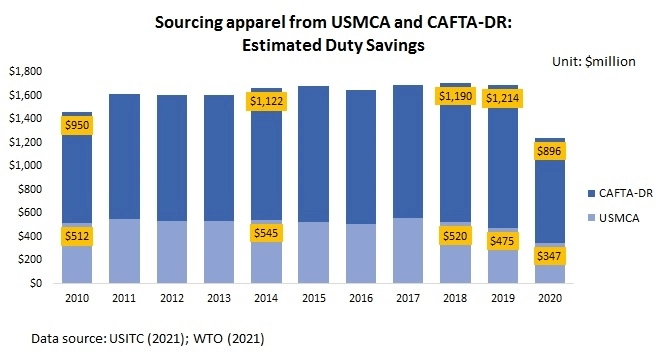
by Sheng Lu via https://shenglufashion.com/tag/usmca/
EU-Mercosur Trade Agreement
The EU-Mercosur trade agreement, signed in 2019 between the European Union and the South American countries of Argentina, Brazil, Paraguay, and Uruguay, marks another significant development for the global fashion industry. This agreement eliminates tariffs on a wide range of products, including textiles and garments, facilitating trade between Europe and South America. With easier access to South American markets, European brands benefit from improved export opportunities, while South American producers gain better access to the European market for fashion goods.
The EU-Mercosur deal is expected to stimulate trade and encourage collaboration in the textile and apparel sectors. For example, European companies that rely on South American raw materials, such as leather and wool, can source these materials more easily without facing high tariffs. Similarly, South American brands that wish to expand into European markets will find it easier to access those markets without the financial burden of tariffs.

by Reuters via https://www.reuters.com/world/eu-mercosur-trade-talks-intensify-weekly-pace-sources-2023-10-05/
World Trade Organization (WTO) and Global Trade Rules
The World Trade Organization (WTO) plays an essential role in regulating international trade, ensuring that trade flows as smoothly and predictably as possible. The WTO sets rules governing trade between nations and works to resolve disputes. For the fashion industry, the WTO’s Trade-Related Aspects of Intellectual Property Rights (TRIPS) Agreement provides a framework for protecting IP across borders, which is particularly critical for fashion brands with valuable designs, logos, and patents (WTO, 2020).
Moreover, the WTO has been instrumental in settling disputes related to tariffs and trade barriers. For example, when countries impose discriminatory tariffs on imported fashion goods, the WTO’s dispute settlement mechanisms can be invoked to challenge these barriers and ensure that trade flows freely. This helps maintain a stable and predictable international trade environment for fashion brands, especially in an era of shifting trade policies and geopolitical tensions.

by kate-deleon via https://iboninternational.org/2015/12/14/20-years-of-wto-a-tale-of-two-economies/
Intellectual Property (IP) in the Fashion Industry: Protecting Creativity Across Borders
Intellectual property (IP) is crucial for the fashion industry, which thrives on creativity, design innovation, and brand recognition. IP rights, including copyrights, trademarks, and patents, protect designers’ and brands’ creations from unauthorized copying or counterfeiting. However, the global nature of the fashion industry means that IP protection can be complicated by differing national laws and enforcement standards.
IP Protection: Copyrights, Trademarks, and Patents
Fashion brands rely on a variety of intellectual property protections to safeguard their designs. Copyrights protect original works of authorship, such as graphic designs and artistic creations, while trademarks safeguard logos, brand names, and distinctive symbols. Design patents protect the ornamental aspects of a garment, ensuring that unique and novel designs cannot be copied by competitors. These legal tools allow designers to control their creations and retain the economic value of their work.
Despite the importance of IP in the fashion industry, the global market presents challenges in enforcing these protections. Different countries have varying levels of enforcement, which can create a situation where counterfeit goods flood markets with fewer legal repercussions for manufacturers. For example, in countries like China, counterfeiting is a significant issue, and fashion companies often face difficulties protecting their intellectual property from infringement. Brands are forced to be proactive, filing lawsuits or working with local authorities to combat counterfeit operations (Baker & McKenzie, 2019).
By Michael Kondoudis via https://www.mekiplaw.com/how-to-protect-your-clothing-brand-the-6-most-important-steps/
Counterfeiting and IP Violations
Counterfeiting is a major concern for luxury brands, and it presents a particular challenge for the fashion industry. The counterfeit trade undermines the value of genuine goods, costs the industry billions of dollars in lost revenue, and damages brand reputation. According to a report by the European Union Intellectual Property Office (EUIPO), counterfeiting accounts for around 6.8% of global trade, a number that includes fashion goods. Addressing this issue requires international cooperation and stronger enforcement of IP laws across borders.
To combat counterfeiting, many fashion companies are increasing their efforts to safeguard their IP through more rigorous monitoring of global markets and collaboration with law enforcement agencies. Furthermore, companies are using technology, such as blockchain and QR codes, to track products and provide consumers with proof of authenticity, thereby combating counterfeiting at the consumer level.

By Janai Norman via https://abcnews.go.com/Business/superfakes-copycat-manufacturers-becoming-increasingly-skilled-producing-knock/story?id=109344382
Impact of Duties and Tariffs on Fashion: Navigating Price Volatility
Tariffs, duties, and quotas are crucial elements of international trade policy that impact the pricing of fashion goods, especially in times of political instability or trade disputes. Tariffs are a form of tax levied on imported goods, making them more expensive in the importing country. The imposition of tariffs can significantly affect fashion companies, particularly those that rely on global supply chains and low-cost production methods.
Duties, Tariffs, and Their Impact on Fashion Brands
The US-China trade war, which began in 2018, is one of the most well-known examples of how tariffs can disrupt global trade in fashion. During the trade dispute, the U.S. imposed tariffs of up to 25% on Chinese-made apparel and textiles, significantly raising the price of these goods. The tariffs had a direct impact on fashion brands that sourced clothing and textiles from China, forcing them to either absorb the cost or pass it on to consumers (Council on Foreign Relations, 2019). As a result, many fashion companies, especially those in the fast fashion sector, saw their profit margins squeezed as production costs increased.
Strategies to Manage Tariff Volatility
Fashion companies have responded to tariff volatility in a variety of ways. Some have shifted production to countries not affected by the U.S. tariffs, such as Vietnam, Bangladesh, or Indonesia, where labor costs are lower and tariffs are either non-existent or less severe. For example, Nike and Adidas have increasingly turned to Southeast Asia for manufacturing, taking advantage of the lower tariffs and production costs in the region.
Other companies have adjusted their pricing strategies, either by increasing the price of products or diversifying their supply chains to include more cost-effective manufacturing locations. The ability to shift production sites quickly is a key strategy for brands that need to remain competitive in a market where tariffs and duties can change rapidly due to political and economic shifts.
The Future of Fashion Trade Policy: Sustainability and Digital Transformation
As the fashion industry moves towards greater sustainability, trade policies are also evolving to reflect these concerns. Sustainability is becoming a priority for fashion brands, regulators, and consumers alike. At the same time, digital transformation is reshaping how fashion brands manage their supply chains and interact with consumers.
Sustainability in Fashion Trade Policy
The EU Green Deal is an example of how trade policies are incorporating environmental considerations. The EU is committed to reducing its carbon emissions and promoting sustainable practices across all industries, including fashion. This means that fashion companies operating in the EU will face stricter regulations on waste management, chemical use, and carbon emissions. As a result, brands will need to adapt by investing in sustainable materials, reducing their environmental impact, and complying with EU regulations to remain competitive in the European market.

By the European Union via https://ec.europa.eu/stories/european-green-deal/
Digital Product Passports and Traceability
Digital product passports are an emerging trend that will play a significant role in the future of fashion trade policy. These passports contain detailed information about the life cycle of a product, including materials, manufacturing processes, and sustainability credentials. For example, brands like Chanel and Gucci are already incorporating digital passports into their products to provide consumers with transparent information about their purchases. These technologies allow consumers to trace the origins of their fashion items and ensure they meet ethical and environmental standards, creating a more accountable fashion industry.

By SWEAR via https://www.swear-london.com/digital-passport-in-fashion
Conclusion: Navigating Complexities in Fashion Trade and Policy
The global fashion industry is in the midst of a significant transformation, driven by changes in trade policy, IP protection, and sustainability initiatives. Fashion companies must navigate a complex web of international agreements, tariffs, and intellectual property laws while adapting to the growing demand for transparency and sustainability. The trade policies and strategies that fashion brands adopt today will shape the industry’s future, determining how products are sourced, produced, and sold on a global scale. As such, staying informed about changes in trade policy and intellectual property protections is essential for fashion brands striving to remain competitive in this dynamic environment.
References
Global Legal Guide for luxury & fashion companies | Insight | Baker McKenzie. (n.d.). Baker McKenzie. https://www.bakermckenzie.com/en/insight/publications/guides/global-legal-guide-for-luxury-and-fashion
CFR.org Editors. (2017, April 27). U.S.-China Relations. Council on Foreign Relations. https://www.cfr.org/timeline/us-china-relations
European Commission. (2020). The European Green Deal. European Commission. https://ec.europa.eu/info/strategy/priorities-2019-2024/european-green-deal_en
United States-Mexico-Canada Agreement. (n.d.). United States Trade Representative. https://ustr.gov/trade-agreements/free-trade-agreements/united-states-mexico-canada-agreement
WTO | intellectual property (TRIPS) – agreement text – standards. (n.d.). https://www.wto.org/english/docs_e/legal_e/31bis_trips_04e.htm
 Athina Bardho
Hinterlasse einen Kommentar